

The Sultanate of Oman is a great destination for families and friends alike and if culture and adventure are what you wish to experience on your next vacation, you should definitely plan a trip to Oman. Here's a great collection of blogs on what to do in Oman, as well as some ideas about how to make the most of your Oman visit. Find the Oman travel articles and blogs right here at the Zahara Tours Blog and make your vacation to Oman a memorable one armed with insider tips and travel ideas.
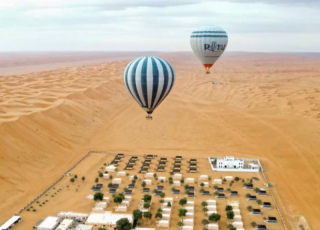
The Royal Balloon Company has been granted permission by the Civil Aviation Authority (CAA) of the Sultanate of Oman to begin operating hot air balloon rides in the Sharqiyah Sands on January 24, 2023, as part of the government’s tourism campaign. Sheikh Ali bin Ahmed Al Shamsi, the Governor of North Sharqiyah province, launched commercial operations of Royal Balloon, a Turkish company that operates hot air balloons in Al Wasel, Bidiya. Getting to see Sharqiyah Sands and its beautiful landscape, mystical vibe, and shimmering sands is pretty incredible on its own. However it gets even more captivating when you witness it from a hot-air balloon flying thousands of feet above the dunes. Within minutes of taking off from the ground visitors will find themself drifting over the serene sands as the takeoff point becomes smaller and smaller in the distance. Watching from the basket of a hot air balloon as the rising sun sets the sky ablaze can be a surreal experience. Hot-air ballooning has just been launched in Oman as the Sultanate of Oman's Civil Aviation Authority (CAA) has given the permit to Royal Balloon Company to start operations of its hot air balloon ride in Sharqiyah Sands in January, 2023.This is in line with government's campaign to boost tourism and to support sources of economic diversification in the civil aviation sector while also providing a unique way to experience the wonders of Oman. The project is a partnership between an Omani company in collaboration with a Turkish company specialised in the field of hot air ballooning around the world with Oman becoming the fifth country it has started operations in. They are said to be starting operations with two balloons this season in the North Sharqiyah region, only a fraction of their international fleet which supposedly totals to more than 22 hot air balloons. The balloons have a capacity of 12 people per balloon, costing OMR 80 per person, per ride. The balloon ride will take place for 40 to 60 minutes during sunrise reaching a height of 600 metres above desert level. There are supposed to be discounted prices available for Omani residents and citizens, said to start from OMR 59 per person. The hot air ballooning should run from October to April of each year, during the tourist season in the Sharqiyah Sands as long as safe climatic conditions are available. The company intends to expand into additional areas in the future. As the hot-air ballooning occurs at sunrise, one is required to report at the designated area pre-dawn which would require ballooners to wake-up pretty early, possibly around four in the morning while stars still blanket the sky. On reaching the takeoff point one may see part of the lengthy process to get a hot-air balloon up and running from their arrival, spreading them out, filling up with air, starting them up, and finally getting them in the air. The pilot uses repeated heat blasts to lift the balloon into the air, which results in a lot of noise during takeoff. But once you rise to your cruising height the flame burners are cut, and you drift in sudden, enthralling quietness. This is disturbed only when the pilot needs to light the burner for injecting more hot air into the balloon. Some even describe the experience as near-spiritual. After the first 20 minutes, the scenery changes. It’s still quiet, but starkly different from taking in the sights on land. There are no fixed routes in ballooning. The direction of your rise will be decided by the direction of the wind.. After the time has passed the balloon will land in the landing area. Ready to take to the skies? Remember to consider the following: Hot-air ballooning is heavily weather dependent. Be ready for cancellations if weather conditions are not suitable with rains or strong winds. Balloon baskets aren’t very roomy. There is some space, but not a lot. Finding your place and staying there would be the best. The pilot turns the balloon so you can view everything from every angle. Limit what you carry along. When the basket is full, it is difficult to put your belongings at your feet. The basket hardly sways. So, you can relax. Dress appropriately because getting out of the basket may require a small jump and some jostling. Take a camera with you, but perhaps leave the DSLR at home. The best camera for hot air ballooning is a GoPro. Don’t forget the sunblock. With the launch of commercial balloon rides in Oman, anyone who wishes to try this exciting activity can book their hot air balloon ride above the Sharqiyah Sands. Talk to our travel advisors at +968 24400844 or inbound@zaharatours.com to book your hot air balloon ride today.
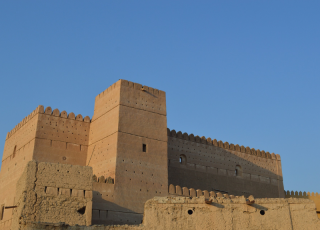
Wherever you head to in Oman, you will notice a number of majestic forts dotting the landscape. Built and rebuilt with time by both many ruling powers including the Portuguese, each of the forts of Oman speak to the history of the country and the construction of the times in which they were built.. Bahla Fort This UNESCO World heritage site is one of the oldest forts in Oman with walls and towers built in adobe, on a sandstone base. The Bahla fort was held by numerous rulers of the region who added and updated the fort over the centuries and the fort and oasis settlement with its perimeter fortification are an excellent example of a type of defensive architectural ensemble of the late medieval period which enabled dominance in the region. The fort is divided into three main areas; the oldest is Al-Qasabah which was built during the middle ages, the enclosed area of Bait al-Hadith meaning ‘new house’ which was constructed in the 1600s and finally the third area of Bait Al-Jabal which translates to ‘mountain house’ and was built in the 1700s. Jabreen fort Built in 1675, the Jabreen fort is one of the best preserved forts in Oman. It has served historically as an important centre of learning and remains famous for its battlements. This three story tall castle, features two towers, and numerous halls and rooms. The castle is one of the most beautiful in Oman with the interiors featuring decorated windows, wooden balconies, arches with inscribed Arabic calligraphy, and breathtaking ceiling artwork. Nizwa fort This ancient fort with sections dating back to the ninth century is an amazing example of historic Omani architecture. Nizwa Fort has not just the biggest tower in Oman but it is also the only fort in the region to have a cylindrical main tower. The fort also contains many exhibits and artefacts including the fort’s defence mechanisms that help one understand the history of the Nizwa fort and region. Having seven wells, a number of prisons, and massive grounds, the fort is an amazing destination for those that wish to learn about the lifestyle of ancient Omani and the history of Oman. A visit to the Nizwa Fort is incomplete without visiting the adjoining Nizwa Souq. Oman’s oldest Souq(marketplace) and a bustling centre of activity Nizwa Souq is completely surrounded by a wall and clearly separated from the rest of the city. A visit to the Souq is a great way to interact with the locals, experience life in Oman, and pick up some fun souvenirs. The Souq is divided into six distinct areas, from the modern West Souq that is great for souvenirs, to the traditional Arabian market in the East Souq for spices and everyday items to the fresh produce hall, the Craft and Sweets Souq, the Fabric and Textiles Souq, and the Animal Market where livestock is sold on Fridays. Muttrah Fort Sitting atop the mountain, Muttrah Fort has guarded and kept watch over the harbour and city that lie below for centuries. With its origin linked to the first Portuguese Empire, it is one of Oman’s oldest forts, dating back to at least the 16th century. Historically Muttrah Fort was to protect against any approach from the mountains or along the route to Old Muscat and to this date remains one of the most visited sites in the country. Today, it is open to visitors and demonstrates the historic importance of fortifying such strategic locations like this fort that offer a broad view of Muttrah, the coast, and surrounding mountains. Fort of Sohar Located some 200 kilometres north of Muscat and a short drive from the UAE border, the fort ensured the security of the city of Sohar which served as a major port for many traders. The fort is currently closed for renovation Ar Rustaq Fort Less than two hours from Muscat, Rustaq is believed to date back to the pre-Islamic Sassanid era.But it is not just the fort's incredible history that is the reason behind its popularity. The fort of Ar Rustaq is a picturesque structure, distinguished by its four towers, exquisite architectural features, the use of carved wood and a historic mosque. An ancient falaj continues to flow under the fort, while the highest courtyard houses the burial site of Imam Nasir and one of his successors. Beyond the walls of the fort, the abundant date trees, scenic wadis, and wealth of historic sites has earned Rustaq a place in the hearts of all visitors. Mirani and Jalali fort, Muscat The historic forts of Al Jalali and Mirani date back to the 16th century, and while they are closed for entry to the general public they define the cityscape of the Omani capital. The forts were formerly used as defence fortresses, and were constructed by the Portuguese during the 16th-century colonial period. Visitors should come view them at sundown to capture the best views.
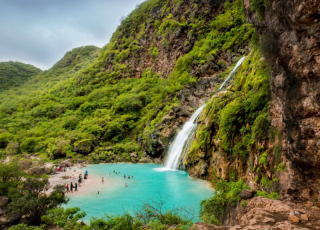
Oman is a land of beautifully blended contrasts. Of worlds old and new, of deserts, islands, high mountains, lush green oases and Wadis set against modern cityscape. Contained within its borders there are many marvels of creativity and natural ones are often easily overlooked. This is a guide to some of our favourite Oman natural wonders, and where to find them. The Omanis are filled with man-made amazing attractions but nothing beats these destinations with mesmerising pristine natural phenomena, greenery and stunning desert dunes. Here are some amazing natural wonders in the Oman: Wadis Oman is blessed with a number of picturesque Wadis and visitors must visit at least a few on their tour of Oman. View more details about the Wadi Walk excursion here. View more details about the Wadi Arbayeen excursion here. Mountains The mountain range spanning across the countryside is a distinct delight to visit offering cooler clime and a completely different atmosphere than the rest of Oman. Jebel Akhdhar There are also some amazing hikes to be discovered on these trails for those that feel like braving the great outdoor. View more details about the Jebel al Akhdhar excursion here. View more details about the Jebel Safari excursion here. Desert Sands Among Oman’s many deserts the must visit is the Wahiba Sands or the Sharqiya Desert which is the textbook image of what we expect from deserts with giant sands dune that shift with every breeze and nothing but sand as far as the eye can see. Stay at some of the amazing desert camps or enjoy luxury getaways in the middle of the desert. One can visit the bedouin tribes to learn more about their ways and adventure enthusiasts can try their hand at the vast range of adventure activities available at the desert ranging from desert drives to Fat Bike Rides, Sandboarding and much more. View more details about the Wahiba Wilderness excursion here. Caves Oman is home to one of the few caves that have been developed for tourism and are open to the public - The Al Hoota Caves. These ancient caves are a delight to explore and have developed a completely different ecosystem underground where being have adapted to survive in the darkess. A great example of this are the translucent blind fish that inhabit the caves that visitor can spot during their tour of the Al Hoota Caves. View more details about the Al Hoota Cave excursion here. Beaches With more than 3000km of coastline, it is no surprise that Oman is home to some truly spectacular beaches that are well worth a visit. Read more about some of the Best Beaches to Visit in Oman here. The Stunning Seascapes Given that Oman is bounded by The Gulf of Oman and the Arabian Sea on two sides it is no wonder than there is more than just land to explore. Visiting the stunning Dimaniyat Islands to explore the underwater sealife, heading out for Dhow tours, going dolphin and whale spotting among the many options to enjoy the seascape of Oman. View more details about the Dolphin Spotting excursion here. View more details about the Al Hoota Cave excursion here. Bonus: Waterfalls If you are visiting during the monsoon season then the Salalah region is a must to explore with its verdant greenery and bountiful waterfalls that crop up all across the land. View more details about the Salalah excursions here. So which of these amazing natural wonders of Oman are your planning to add to your Tour of Oman? Talk to our travel advisors at +968 24400844 or inbound@zaharatours.com to discuss options and plan your ideal Oman tour.
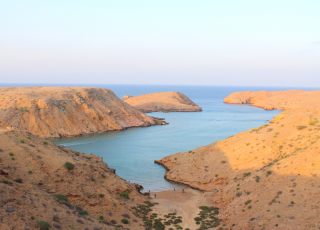
Great news for for those living in Oman—it seems like a long weekend is upon us as we’re inching closer to this year’s National Day. That means some days off and more time to spend with the whole family! When is the Oman National Day holidays this year? While the official date of National Day 2022 is 18th November which falls on a Friday the public holiday date has been announced as 30th November and 1st December 2022 the next Wednesday and Thursday. Wondering what to do during this long weekend? Round up the whole family and celebrate National Day with a fun vacation within Oman. Wahiba Sands Discover the epitome of the desert within these shifting dunes and the shimmering golden hues at the Sharqiya Sands, also known as the Wahiba Sands. This desert stretch is where the Bedu people live and tourists can get a taste of the ancient nomadic culture of Oman. As the sun sets, the sand dunes turn from rich yellow to a coppery orange shade, displaying the best of nature. You can experience the thrill of varying sand sports, try dune bashing, go camping overnight, desert trekking and lots of other activities here.
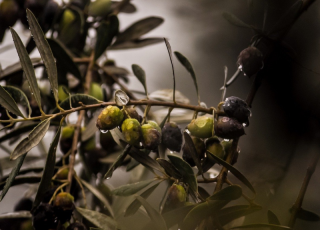
The Jebel Akhdar mountain region, a preferred place for farming in Oman, starts getting ready for olive harvest, come August end. At this time the villagers will start taking the harvested olives to be pressed to produce the first batch of olive oil for the season. The path leading to the olive groves in Jebel Akhdar can only be reached by driving through the winding road up the steep mountain to reach the plantations here. Olive oil harvest started in the country in 2012, with about 15,000 olive trees being planted in the north eastern part of Oman, which enjoys a climate similar to Mediterranean countries. At the beginning of the olive plantation efforts many varieties of olive trees were handed over to hundreds of Omani farmers in an effort to introduce olive cultivation in the Sultanate. Fortunately, after less than a decade since the beginning, it can be said that this project to start olive cultivation in Oman was met with great success and enthusiasm. A wide variety of olive species are currently being produced in the mountainous region of Jebel Akhdar. Many initially believed that olive couldn't be grown in the harsh climatic conditions of Oman, however the persistent efforts of all involved have yielded great results. On your visit here, you can enjoy an educational guided tour through the olive groves of Jebel Akhdar learning about terrace agriculture, growing olives, harvest techniques, milling and cold-pressing of oils along with the possibility of tasting some of the delicious current harvest if you’re lucky. The term “olive tourism” was first used to describe the totality of travel experiences relating to the olive and to olive oil and in Oman, the majority of focus of live tourism lies in the olive harvest, which everyone can explore during harvest season. For those that are interested in other experiences, they can find niche olive oil tastings and olive themed spas. One of the most enjoyable parts of getting to know olive oil is tasting its different varieties and while tastings were once the preserve of professionals, they are now sought out by visitors as well. Tastings can be arranged by special request either indoors or they can be held outdoors in olive groves. The basic equipment for professional tasting includes glasses for the extra virgin olive oils being served. The process is reminiscent of wine tasting, and wins you over sip by sip, as you begin to appreciate how sharp the differences can be between varieties. Those who find themselves in Oman during harvest season should definitely visit the olive plantations at Jebel Akhdar, stroll through the groves, following the workers pruning the olive trees. The plantation tour often offers the opportunity to witness the olive harvest, and explains the processes for the extraction and bottling of olive oil. Reach out to our team at +968 24400844 via phone or email us at inbound@zaharatours.com to book your customised olive tour at Jebel Akhdar in Oman.
Mon, 24 Aug 2026
Mon, 13 Apr 2026

Wed, 22 Oct 2025

Mon, 06 Oct 2025
Wed, 16 Jul 2025

All Rights Reserved © Zahara Tours